


Relationships Get Strong During Meaningful Situations
There are some people who think that relationships get strong through big vacations, expensive gifts, exciting milestones, or dramatic gestures. The real moments, though, that are meaningful are when there is consistency and emotional intimacy that comes quietly.
Connection is formed by having repeated interactions, and this helps to form long-term relationships. These can be things like a text during a busy day at work, a question after eating dinner, a partner who shows you something they found interesting online, or a quick glance. These small moments have more emotional weight than people realize.
As time goes on, these kinds of interactions create emotional closeness, or they can also create emotional distance. Relationships either work or fail, and this isn’t because of one major event but because of how consistently partners respond to ordinary situations.
Bidding for Connection
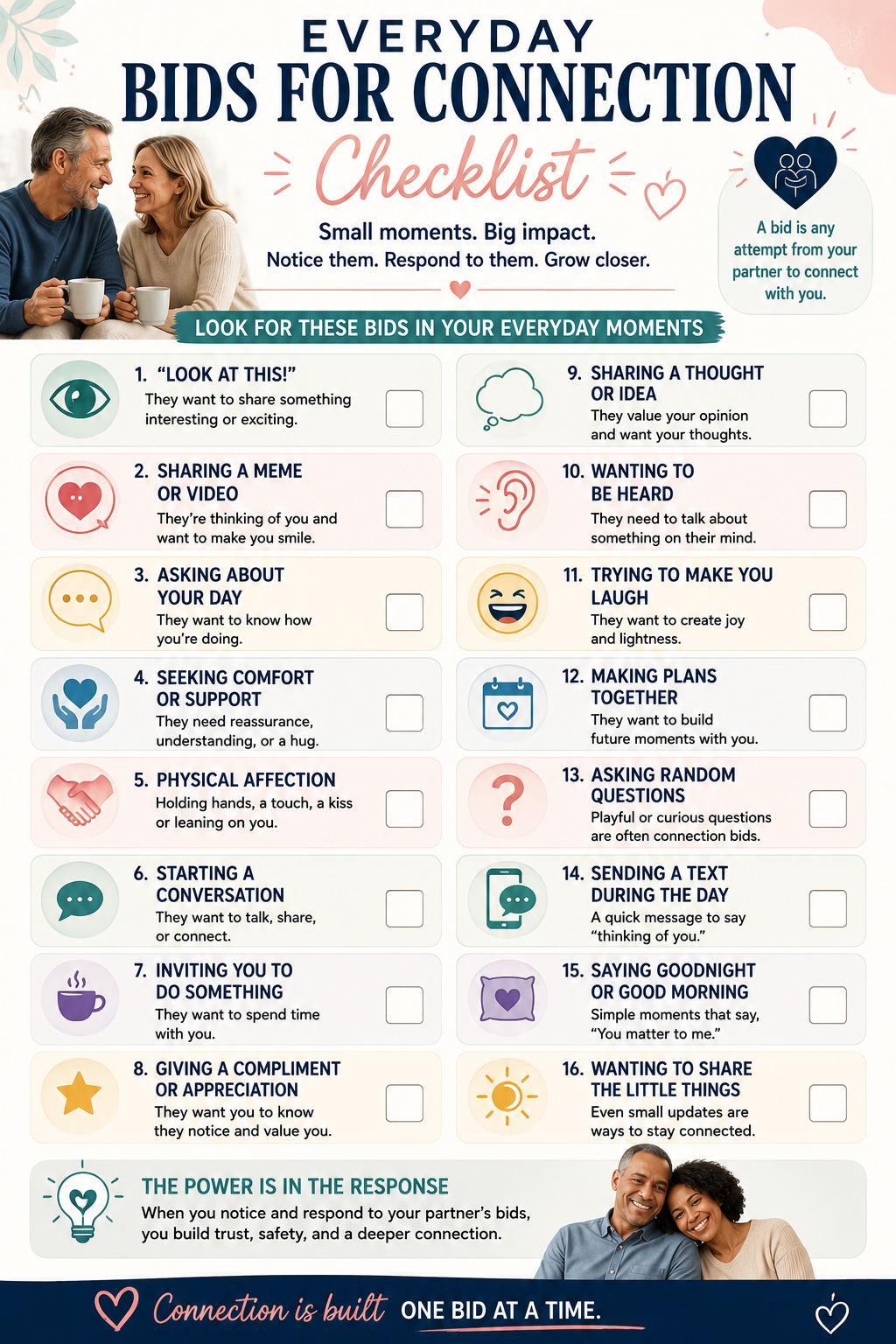
A bid is an attempt that one partner will make to gain emotional attention, connection, or to create engagement from another person. These bids can be things like:
- Nonverbal.
- Verbal.
- Intentional.
- Unconsciously.
- Small.
- Emotionally significant.
Some examples can include these things:
- Asking, “How was your day?”
- Asking, “Look at what I found online.”
- Sighing after getting stressful news.
- A hand placed gently on your shoulder.
- An inside joke.
- Asking for help with something small.
These moments might seem to be insignificant, but emotionally they carry a deeper message, including:
- Silently saying, “Notice me.”
- Silently saying, “Respond to me.”
- Silently saying, “Are we emotionally connected?”
Most people make bids throughout the day and don’t even realize it.
Small Interactions Matter
Human relationships are built by being emotionally consistent and not just by intensity. Neuroscience suggests that having repeated positive interactions can make emotional bonding stronger because the brain starts associating the relationship with comfort, safety, and responsiveness. This can explain why:
- Repeated emotional neglect can feel painful as time goes on.
- Paying attention to small things can feel emotionally meaningful.
- Small moments of disconnection can accumulate over time.
People sometimes underestimate how important it is to be responsive because people’s individual interactions might feel minor. The thing is, though, that the brain will track these patterns and not just big moments.
Connection Through Repetition
Healthy relationships aren’t perfect, but they are defined by having repeated emotional engagement with each other. People who are emotionally connected normally:
- Notice each other’s moods.
- Stay curious about each other.
- Ask follow-up questions.
- Respond to the emotional cues.
This helps to create emotional presence. Relationships that are struggling, on the other hand, see that emotional responsiveness declines slowly in ways like:
- The conversations become shorter.
- The attention gets divided.
- Emotional cues get ignored.
As time goes on, emotional loneliness can develop even when the couple spends a lot of time physically together.
Science and Emotional Responsiveness
Studies show that couples who have regular interactions are more successful when it comes to emotions. This happens because these couples are consistently responding to each other’s attempts at connecting more than couples that are unhealthy.
Research shows that relationship stability is linked to:
- The ability to keep engagement in everyday life.
- Responsiveness even when the interactions are small.
- Emotional attentiveness.
These couples still had conflicts and would argue sometimes or get stressed, but the difference was that they continued emotionally turning to each other even when challenged.
This showed that instead of just focusing on conflict, they focused on understanding each other and having emotional interaction patterns.
Responding With Attention and Connection
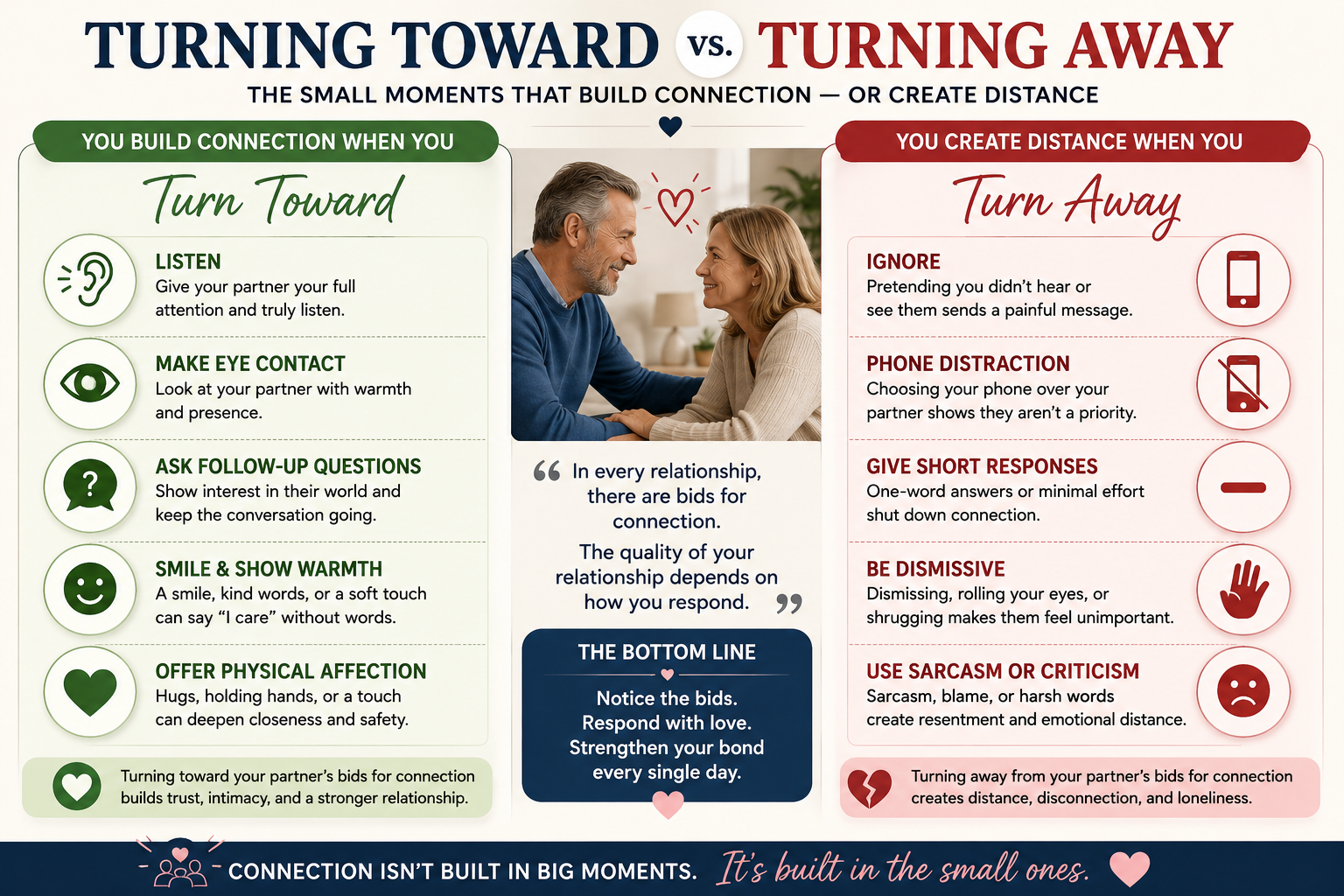
When someone makes an emotional bid, the other person usually responds in one of three ways.
The healthiest response is turning toward the bid by acknowledging it with attention, interest, or emotional support. This can look like things such as:
• Looking up when your partner starts talking.
• Asking questions about something they shared.
• Offering comfort or encouragement.
• Smiling, laughing, or responding warmly.
These small responses communicate emotional availability and connection. They tell the other person that they matter and are being emotionally noticed. As time goes on, these repeated moments can build trust, closeness, and emotional intimacy.
Why Small Moments of Attention Matter So Much
People naturally respond strongly to emotional acknowledgment and connection. Even small moments of validation can help someone feel:
• Emotionally safer.
• More valued.
• More connected within the relationship.
This is why something as simple as eye contact, listening carefully, or responding warmly can have a powerful emotional effect over time.
Emotional Disconnection Through Inattention
Turning away happens when emotional bids are ignored, missed, or only half acknowledged. This can include things like:
• Scrolling through a phone while someone is talking.
• Giving distracted responses.
• Missing emotional cues completely.
Most of the time, this isn’t intentional. Stress, exhaustion, work pressure, and constant distractions can make people emotionally unavailable without realizing it.
Still, repeated emotional disconnection slowly affects the relationship over time. One missed moment usually doesn’t create damage, but consistent emotional absence often does.
Why Attention Feels Harder in Modern Relationships
Modern relationships compete constantly with distractions and overstimulation. This can include things like:
• Smartphones.
• Social media.
• Streaming entertainment.
• Work notifications.
• Mental burnout and stress.
Some couples spend time physically together while mentally focused somewhere else. Small habits like half-listening, checking notifications during conversations, or responding automatically can slowly weaken emotional closeness over time.
Responding With Irritation or Defensiveness
Turning against happens when emotional bids are met with frustration, sarcasm, criticism, or hostility. Sometimes this sounds like:
• “Can’t you see I’m busy?”
• Dismissive reactions or eye rolling.
• Defensive responses to simple questions.
Emotional bids involve vulnerability, even when they seem small. Negative reactions can make people feel emotionally rejected or unsafe. As time goes on, having repeated negative responses can lead to things like:
• Emotional withdrawal.
• Less communication.
• Increased resentment.
• Emotional shutdown.
Eventually, people may stop trying to connect because the emotional risk starts feeling too painful or exhausting.
Why Bids Can Be Indirect
One interesting thing about bids is that they are rarely straightforward. People don’t normally say something like, “I need emotional reassurance right now,” but instead they bid indirectly because they don’t want to be vulnerable. Here is an example:
- Complaining about work can mean, “I need comfort.”
- Showing your partner a funny video might mean, “Share this moment with me.”
- Asking random questions might be an attempt to connect.
When these things show up subtly, it can explain why people miss the bids. Partners sometimes focus on the literal things that they hear and not the emotional meaning behind them.
Emotional Distance Can Build
Most relationships don’t go bad because of one big event, but most of the time, emotional distance grows gradually through small disconnections, such as:
- The conversations become functional and not emotional.
- Partners don’t share vulnerability.
- Emotional responsiveness gets less.
When this happens, couples might start feeling:
- Lonely even when together.
- That they are emotionally unnoticed.
- Emotions are not put as a priority.
The gradual emotional breakdown is one of the biggest patterns that happens in struggling relationships.
Emotional Attention and Long-Term Satisfaction
Relationship satisfaction is based on whether people feel emotionally prioritized by their partner. Consistent emotional responsiveness can create things like:
- Stronger communication.
- Emotional intimacy.
- Security.
- Trust.
- Increased relationship resilience.
When people feel valued in their emotions, the conflict is easier to work through because the overall relationship feels more secure.
Making Meaningful Bids
Healthy bids don’t have to be hard or dramatic. Here are some examples:
- Inviting conversation.
- Staying attentive.
- Initiating affection.
- Sharing appreciation.
- Asking thoughtful follow-up questions.
- Sending encouraging messages when days are stressful.
The goal isn’t to be perfect, but it’s about having emotional consistency.
Recognizing Your Partners’ Bids
There are many bids that are easy to overlook because they don’t show emotionally right away. Your partner might be looking for a connection when they do things like:
- Talk about stress repeatedly.
- Show you different online content.
- Ask unnecessary questions.
- Sit quietly nearby after having a hard day.
Instead of focusing on words, try to pay attention to emotional invitations in the interaction.
Emotional Presence Over Romance
There are people who often think relationship success will depend on keeping the relationship constantly exciting or passionate. But the truth is, long-term emotional intimacy is often connected to emotional presence, such as:
- Actively listening.
- Responding with consistency.
- Staying curious about each other.
- Protecting small moments during a connection.
These behaviors help to create emotional stability that keeps the relationship strong for years.
Final Thoughts: Relationships Aren’t Built on Grand Gestures Alone
Strong relationships aren’t built on grand gestures alone but on repeated moments of emotional responsiveness and attention. Responding quickly after a long day, asking a thoughtful question, giving a comforting touch, or sharing a laugh in the kitchen can sustain these strong feelings as time goes on.
These moments might seem small or insignificant, but together they create the emotional stance of long-term love.
A lasting relationship can be defined by moments where couples keep choosing each other emotionally or in ordinary moments each day, instead of just dramatic moments.
Frequently Asked Questions
1. What are bids for connection in a relationship?
Bids for connection are small attempts to get attention, affection, support, or a response from your partner. They can be words, gestures, questions, jokes, texts, or simple moments of sharing.
2. Why are bids for connection important?
They matter because relationships are built through small daily interactions. When partners respond with care, trust and emotional closeness grow over time.
3. What is an example of a bid for connection?
An example could be saying, “Look at this,” sending a funny message, asking how your partner’s day went, reaching for their hand, or sharing a thought.
4. What does turning toward mean?
Turning toward means responding to your partner’s bid with attention, warmth, interest, or affection instead of ignoring or dismissing it.
5. What does turning away mean?
Turning away means missing, ignoring, or rejecting a partner’s attempt to connect. This can include short answers, distractions, or acting uninterested.
6. Can small moments really improve a relationship?
Yes. Small moments create emotional safety when they happen consistently. A kind response, a smile, or a few minutes of full attention can make your partner feel valued.
7. How do I recognize my partner’s bids for connection?
Pay attention when your partner tries to share something, asks a question, seeks comfort, makes a joke, touches you gently, or invites you into their world.
8. What are subtle bids for connection?
Subtle bids may include sighing, sitting close, asking random questions, sending a link, mentioning a problem, or trying to start a light conversation.
9. What happens when bids are ignored?
When bids are ignored often, a partner may feel unimportant, lonely, or emotionally distant. Over time, they may stop trying to connect.
10. How can I respond better to bids for connection?
You can respond better by listening, making eye contact, asking follow-up questions, showing warmth, putting down distractions, and offering support.
11. Do bids for connection always need a big response?
No. Many bids only need a small response, such as a smile, a short comment, a touch, or a few seconds of attention.
12. Can texting be a bid for connection?
Yes. A quick text, meme, photo, or simple “thinking of you” message can be a bid for attention, affection, or emotional closeness.
13. How does phone distraction affect relationships?
Phone distraction can make a partner feel ignored or less important. Putting the phone down during key moments helps create presence and connection.
14. What if I miss my partner’s bid for connection?
If you miss a bid, you can repair it by acknowledging the moment, apologizing if needed, and re-engaging with warmth and attention.
15. How can couples build stronger daily connection?
Couples can build connection by checking in, listening fully, showing appreciation, laughing together, offering affection, and responding kindly to small bids.
16. Are bids for connection only romantic?
No. Bids for connection can happen in romantic relationships, friendships, family relationships, and even close workplace relationships.
17. Why do some people stop making bids for connection?
People may stop making bids when they feel repeatedly ignored, rejected, criticized, or emotionally unsafe.
18. Can responding to bids reduce conflict?
Yes. When partners feel seen and valued, they are often less defensive and more open during difficult conversations.
19. How often should couples turn toward each other?
Couples should try to turn toward each other as often as possible in everyday moments, especially during small opportunities for attention and care.
20. What is the easiest way to start improving connection today?
The easiest way is to notice one small bid from your partner and respond with full attention, kindness, and genuine interest.