

Updated
A tarot reading is not a reliable basis for predicting income, investment returns, an inheritance or a gambling win. If you enjoy tarot, use its images to explore a question or feeling. Then evaluate any financial decision using relevant information that exists independently of the cards.
Correction: An earlier version said tarot could create wealth, identify high-earning investments and predict windfalls. It also speculated about the private fulfillment of deceased public figures. Those unsupported claims have been removed.
What a reflective reading can actually involve
You might look at a card and notice that an image of comfort appeals to you, or that a scene of change makes you uneasy. That can be a starting point for writing about what you want. It does not reveal the balance of a future bank account or verify that an offer is safe.
Keep the question personal and open: “What am I hoping this purchase will change?” or “Which part of this decision am I avoiding?” You can ask the same questions without a deck. A reader’s interpretation is a suggestion you may question or decline.
Use three separate notes: prompt, evidence and next step
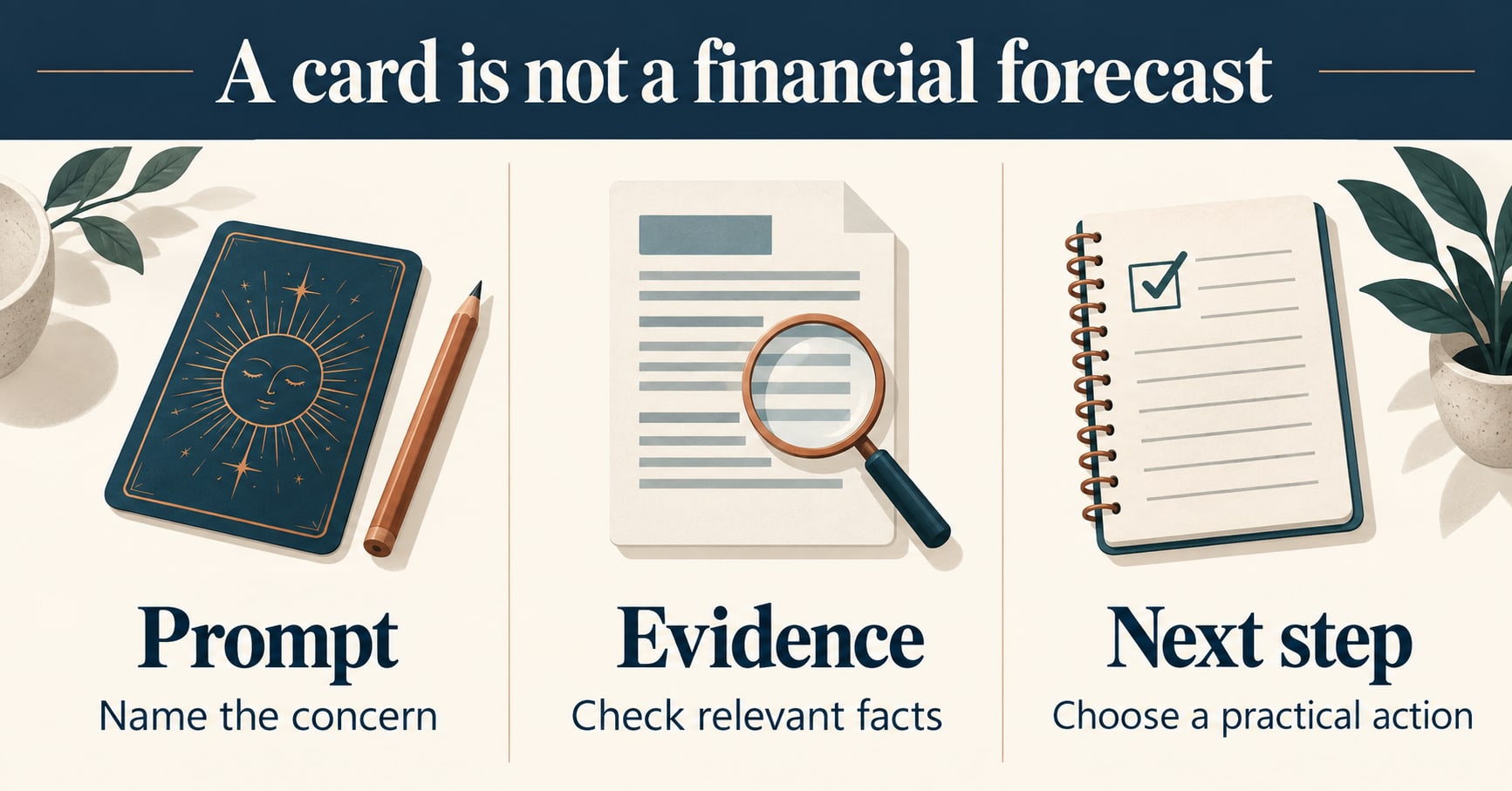
The graphic’s three columns are an optional note-taking format, not a validated financial method. Their purpose is to stop an interesting interpretation from quietly turning into a factual claim.
Prompt: name the concern
Write the thought the card brought up. For example: “I want more control over my work schedule.” Keep it in your own words rather than treating the card as an instruction.
Evidence: check the relevant facts
For a job offer, this could mean reading the written hours, pay, benefits and conditions, then considering commuting or other costs. Mark unanswered questions clearly. A favorable reading does not fill those gaps.
Next step: choose a practical action
You might request the written terms, ask a question, compare another option or arrange qualified advice. Asking for information is a different action from committing money or accepting an offer.
Illustrative example: A card makes a new project feel exciting. Your note can say, “I am interested in trying this.” Before paying for it, check the actual price, what is included and whether the commitment suits your situation. Excitement is relevant to your preferences; it is not evidence of future profit.
Investment questions belong outside the reading
The U.S. Securities and Exchange Commission’s Investor.gov guide to questions before investing recommends checking the seller, understanding the investment and examining risk. It warns about pitches offering high returns with little or no risk. A card name, lucky date or reader’s confidence does not replace those checks.
Read the relevant disclosures and ask for explanations you understand. For investment advice, check the professional’s registration and background through the appropriate regulator. Investor.gov provides U.S. resources; elsewhere, use your country’s securities regulator. Registration does not guarantee an investment’s success.
Decide what the reading itself is worth to you
If you choose a paid session, treat its fee as spending on an optional service. Ask about the rate, minimum charge, taxes, recurring payments and any extra services before starting. Set a maximum you are comfortable spending without relying on a hoped-for windfall to cover it.
For example, an advertised rate of $3 per minute for 20 minutes totals $60 before any additional charges. That arithmetic tells you more about the session’s immediate financial effect than a promise that the reading will “pay for itself.” The numbers are illustrative, not a quote from a provider.
When to stop and reassess
A reading should not require you to buy spells, amulets or further sessions to unlock money. If the conversation becomes a promise of financial rescue, our guide to money-psychic promises, costs and practical help explains what to examine.
Keep decisions open until you have the information you need. Tarot can remain part of a personal reflective practice without being given authority over investments, essential spending or another person’s financial choices.