
 I have dependably been exceptionally inquisitive about fortune telling, and I have spent a fortune on having readings myself, throughout the years! It jumped out at me to solicit the blessed messengers what they think from it and whether they think it works.
I am curious. Does fortune telling actually work? Can people predict other people’s futures? Is it ever really helpful? If it does work, which kind is best? Tarot? Palmistry? Tea leaves? And how do you know if the fortune teller that you go to is any good?
Dearest one, there are several answers to your questions! Firstly, does fortune telling work?
At times, yes it does. At times, one person will be able to accurately predict what will happen to another person. And at other times, the predictions that are made might not ‘come true’ or may happen in ways that have not been predicted. And so, you might well ask in what circumstances does fortune telling work and in what circumstances does it not?
The truth is that you are constantly shifting and changing what ‘happens’ to you. The things that appear in your ‘future’ today may not actually happen. You may change something in your own approach to your life, or in your belief system or in your energy field that results in a different outcome to the one that has been predicted.
You may decide that the outcome is not one that you would like to experience, and you might make changes that prevent it from happening.
It is a very interesting question, this one of ‘fortune –telling’ and not only whether it is accurate but also whether it is useful.
Some of you have made decisions before you came into your physical bodies, decisions about events and circumstances that you will definitely experience, and that you have incorporated into the overall ‘plan’ for your life. You may have decided to experience success in a certain field, such as the performing arts or politics or working in the media, and this success might seem to just ‘fall into place’ for you, without any apparent struggle or concern on your part. When you have a strongly held choice of life path, it can be easy for a person who has developed his or her intuitive skills to ‘read’ this about you. It is as if you are wearing this energy in your field. Some of you wear the energy of prosperity, some of fame, some of caring for children, or love of nature. There are all kinds of energies that  you can ‘wear’ and they can be seen by people who percieve energy. The energies associated with conflict or struggle or anger or sadness can also be strong and easy to read. Quite often, people will be afraid to visit a ‘fortune teller’ in case they hear something that is unpleasant, something that they do not wish to experience. It is important to realise that even though you may be wearing the energies of challenging or unhappy experiences in your energy field, they are not ‘stuck’ to you, you are not stuck with them! In these situations, a fortune teller can actually be useful in shining a light on areas of concern that can then be healed and resolved and transmuted. The energy of your soul is always loving and compassionate and joyful, the energies of anger and sadness and fear are not emanating from your soul, they come from your mind, and the way in which it filters and interprets what has already happened in your life and in the lives of other people. When you come to experience the pure energy of your soul and it’s consciousness you will know that it is always at ease and at peace. When your mind is not at peace, you know that you are not experiencing the pure energy of your soul, so in fact these unpleasant feelings act as an excellent barometer of your level of consciousness. And so to answer your question about whether fortune tellers can be useful, the answer is yes, they can. They can help you to see what is happening in your own unconscious mind and how it might be influencing what is happening in your life. If your fortune teller predicts something that delights you and pleases you, this can help you to move in the direction of creating this event or situation that brings you a joyful feeling. The only thing to remember in this situation is not to be discouraged if the happy event does not happen as quickly or in the same way that it has been predicted! We have seen people become despondent when the handsome stranger or the wonderful new job does not materialise exactly as they have been told it will, and they have become ‘down-hearted- and disappointed as a result. In these situations it is important to keep creating the event in your imagination, feeling the feelings that you associate with it and watching out for any limiting beliefs or behaviours that are holding you back from the experience that you desire to create.
 In answer to your final question about which kind of fortune-teller to use, we would strongly suggest that you use your own inner compass to guide you in the direction of the one who is right for you. Any and all of the techniques that are commonly used can be useful, for they are merely tools, it is the intention and the intuitive skills of the fortune-teller that are important!
As you consider the person, whether you are looking at them in the flesh, or merely looking at their advertisement, see if you get a feeling from them. Generally you will get a strongly uplifting feeling if the person is right for you and can be helpful to you. If you get no feeling at all, it may be neither the right time nor the right person for you to consult. If you get a feeling of your energy being lowered, or a feeling of fearfulness or sadness or anxiety we would likewise suggest that this person is not going to be helpful to you at this time. Even if the fortune teller needs to bring you some ‘bad’ news in order to help you to resolve something, the feeling that you get from the person will always be an uplifting feeling, and this is your own soul’s way of guiding you to make the choices that can most benefit you on your path. We trust that these answers have shone a light on your questions!
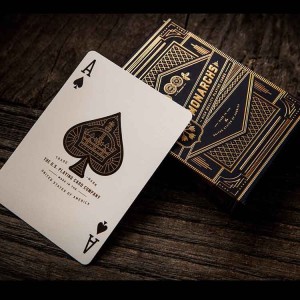
 Then, study and comprehend the suites.
  Entity of Nine –









 Tea leaves and coffee grounds – Search the residue left after a warm drink of tea or coffee for symbols, letters, or even faces. Do you see any familiar patterns? Generally, the closer a picture is to the rim of the cup, the sooner the event it foretells. You might make out things that don’t immediately make sense (what’s that duck doing in your query about a promotion?), or that only seem like half an answer. For better or worse, tea leaf reading is open ended, making it ideal for practiced readers and challenging for the less proficient.
 Coconuts – With its hard, hairy shell and soft, creamy interior, the coconut is a biological and culinary wonder—and in the West African system of Obi divination, it’s also a tool for foretelling. Yes or no questions are instantly answered by flipping a few chunks of the coconut shell. Based on the way they land (shells up or down), you’ll learn what the spirits think of your situation. In places where coconuts are hard to come by (like Canada in the winter), Obi practitioners substitute cowrie shells.
 Professional psychics DO NOT have neon signs, or large signs of any kind in front of their offices!
 Here Are 6 Signs Of A Legitimate Psychic: